

Thakur · 1 of 7
Who is Thakur?
Deep in a summer night, in a village of the Padma country of eastern Bengal, a young doctor sat on a chair in his oldest friend’s house and sang to himself. He was twenty-five. The villages knew him simply as Daktarbabu, the doctor. The song he chose that night was a hymn of samadhi: No sun, no light, no lovely moon; like a shadow on the sky floats the image of the world…
Lost in the song, he began to slip from the chair. The men in the room caught him and laid him on a mat on the floor. They had seen this before, but whatever he had said then was gone. This time they set about taking down the words. The first sentence anyone managed to catch was in Bengali: Āmi chāi śuddhātmā, “I want a pure soul.” By the end of the night they had sixty-five utterances on paper.
It would happen again and again over the next five years, until 1,467 utterances had been taken down. As he lay so one morning, a lawyer who had lost almost all faith in the honesty of men pushed a pin into his finger, between the nail and the flesh. Blood came. Nothing else changed. Then the lawyer joined the others in taking down the words.
His name was Anukulchandra Chakraborty. A day would come when many would not even know that name, but everyone would know the name Thakur. This is a short reading about him. You do not need to believe anything about him to read here, and nobody is asked to change their religion. In a flood, he once said, “tiger, bear, monkey, snake, and man will all climb the selfsame tree”, and then asked: “what, then, are Hindu, Muslim, Buddhist, Christian?”
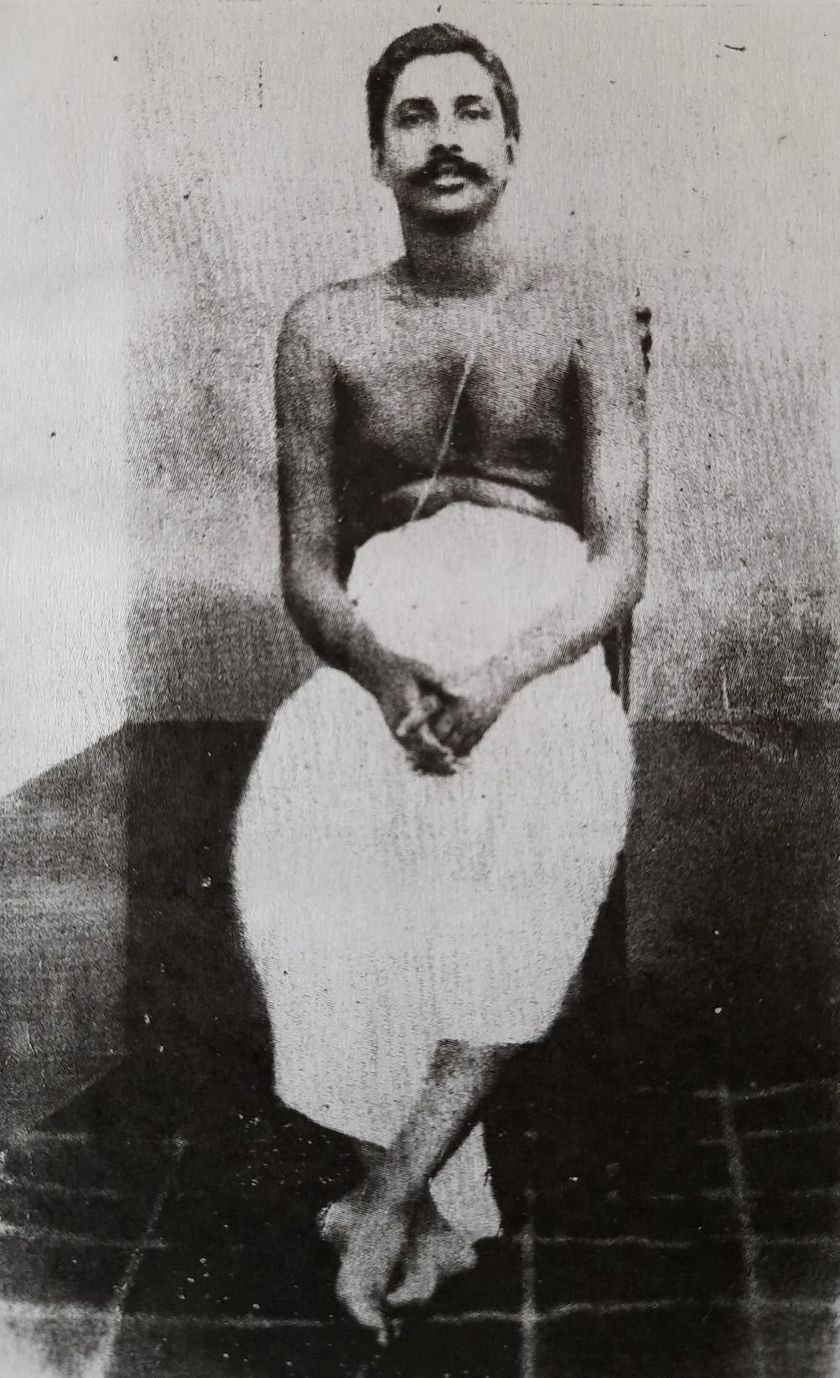
The boy who could not bear another’s pain
He was born in Himaitpur, a village on the bank of the Padma. When he was five or six, his playmates took him fishing, and a big fish took his hook. On the bank it lay thrashing. Anukul burst out crying and screamed for help, and at his pleading people worked the fish free of the hook and threw it back into the river.
Another morning he saw a fishermen’s boat full of netted fish, gasping for breath. The catch would fetch about two rupees at market. He clung to his mother and wept until she gave him the money. “Brothers, take these two rupees,” he begged. “Don’t make the fish suffer any more. Let them go.”
From childhood he could never think of anyone as other than himself.
The doctor who gave away what he had
He studied medicine in Calcutta, and there came a day when he had six annas left in the world and nothing more to come. A friend came to him in great trouble, needing eight annas at once. He gave him all six, and after that, when hunger came, he filled his stomach at a street tap. He would never ride the horse-drawn trams, because he had once seen a horse fall on its face in the traces.
Back in his village, cholera came, and his parents forbade him to go near it. “I took such pains to learn medicine,” he pleaded. “If I can’t use it to serve people in distress… then what was it all for?” Given leave for a single day, he went through six villages and more, house by house, and by nightfall had arranged treatment for patients in their hundreds.
He practised allopathy and homeopathy alike, and Ayurveda when a case called for it. “Curopathy,” he called it: anything that cures. He asked no fee for a visit and no price for medicine. If a patient could not afford the medicine, he bought it himself, and often he nursed the patient and cooked the patient’s food with his own hands. The poor understood, in their hearts, that they had no friend like him.
The Name awakes
In those years he led a band of kirtan singers through the river villages, from dusk until midnight and sometimes until dawn. Before long kirtan parties had sprung up in village after village, and people of every rank, from Brahmins down to the Bunes and the Bagdis, were caught up in it. The men around him changed. A thief gave up stealing; the old village quarrels vanished, no one could say where.
Calling him Daktarbabu no longer satisfied them. Some began to call him Thakur, the word Bengal uses for the Lord, and for a holy man. He objected, many times, in many ways. At last he gave in:
People call even the cook-Brahmin ‘Thakur’, don’t they? So if these people get a little joy out of calling me ‘Thakur’, let them call me so — what else can I do!
Brajagopal Duttaray, Sree Sree Thakur Anukulchandra, Book 1, ch. 11, p. 202 · Translated by Souvik Ghosh
When he was about to turn thirty, thousands waited near midnight at the river landing at Kushtia for his steamer, so that they could fall at his feet. The moment it touched the landing he slipped down into the crush, and before a single person could bow to him, he bowed to them, full length on the ground. “There is no need at all to fuss over me,” he told them.
A village that lived and grew
Around his family’s homestead at Himaitpur a community grew up. In the days when it had not a paisa to its name, and its workers did not yet get two meals a day, he said to one of them, laughing, “Try to raise funds for founding a science laboratory here.” Many thought it a jest. It was the most intense longing of his heart.
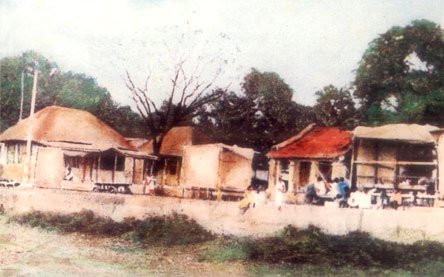
In time the village by the river held a school, the Tapovan, whose classes met under the trees; a dispensary; a power-house; a press, a factory and cottage industries; a Chemical Works; and the Vishwa Vigyan Kendra, where researchers bent over their work in the afternoons. A village once thick with jungle and wild beasts had become the home of more than a thousand people. None of the workers drew a salary. Each thought only of how much happier it would make the one they loved.
Those who came to him
They came from every side. Chittaranjan Das stayed in a house on the bank of the Padma, and afterwards said to Mahatma Gandhi, of Thakur: “he has given me strength I did not possess before.” Subhas Chandra Bose, whose parents were Thakur’s initiates, would not take the chair he was offered. “Thakur, you are the Guru of my Guru, my parents,” he said, and sat down on the floor.
The poet Kantichandra Ghosh took initiation and came often to stay. Scholars sent by the university, Prasanta Chandra Mahalanobis and Satyen Bose among them, walked through his laboratories and found in him a boundless knowledge of science.
And always there were the villagers. On the morning he left Himaitpur, Dulal, born in a family of sweepers, whose work was to clean the filth of the ashram, stood before him with folded hands and wept. Tears came to Thakur’s eyes, and with great love he comforted him.
One cloth
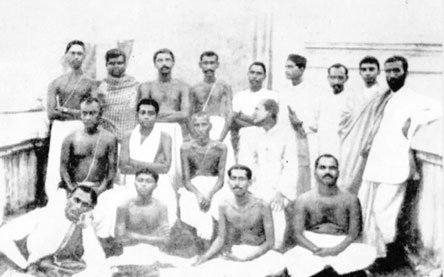
His body was failing, and Bengal was on fire. One rainy morning he left Himaitpur for Deoghar, in Bihar, for a change of air. From village after village, Hindus and Muslims came running, and stood in the ashram’s courtyard with the same speechless pain on every face. He went in a single cloth.
Behind him stayed the school, the power-house, the laboratories, the workshops, the press, the houses and the fields. In the months that followed, the men who had worked those machines left every tool where it lay and walked out of the ashram, weeping silently. At Deoghar he had to begin again from nothing, with the workers he had trained with his own hands and one half-filling meal a day. Teachers, scientists and doctors pulled rickshaws and sold peanuts beside their labouring brothers.
Yet the loss of land and buildings did not touch him.
People say, ‘What a great loss!’ — but it does not touch me. But man is very precious to me.
Priyoporomer Ātmakathā (his recorded talks at Deoghar), ch. 2, arc V, p. 282 · Translated by Souvik Ghosh
Read on
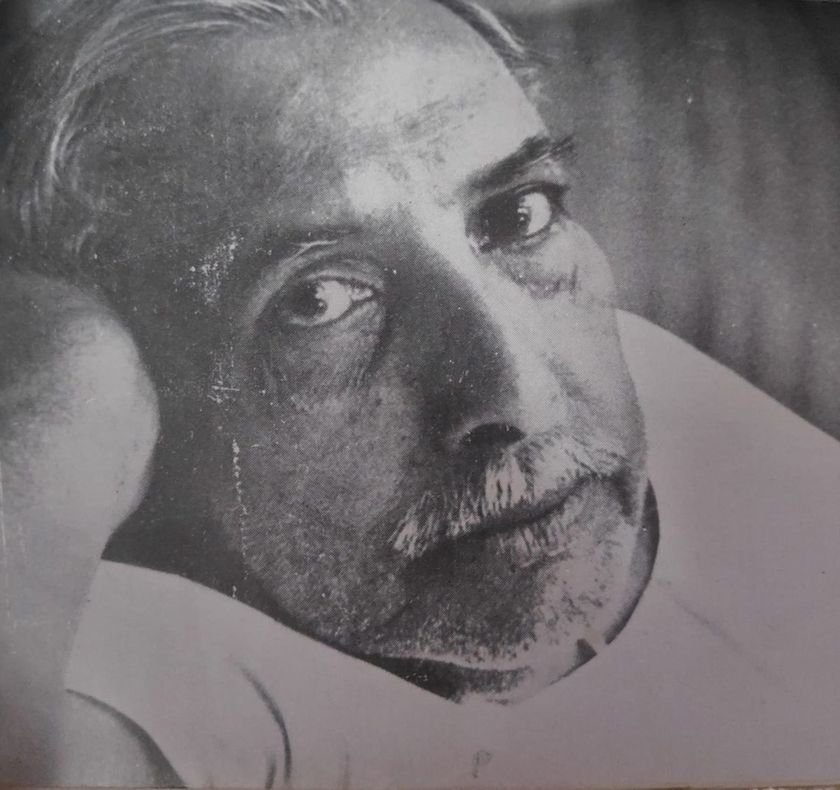
These are only a few strokes. The pages that follow tell the story more slowly: the whole life, the mother who shaped him, what he came to do, and the conversations of those who sat with him and asked their questions.