

Thakur · 3 of 7
His Mother
It was midday in Himaitpur, and the sun was blazing. Manomohini was displeased with her small son over something, and she had taken up a thin switch of bamboo and was running after him to punish him. She could not catch him; Anukul was far too quick for her. Then he looked back. His mother had run herself breathless in the heat, and the sweat was pouring down her whole body.
He could not bear to see it. He turned, ran back to her as fast as his legs would carry him, and threw his arms around her.
His father never once raised a hand to him. His mother kept him under a strict rule, and her scolding and her punishments came often. Yet this is what she would say of him: “…one thing about him I always noticed: he never once disobeyed an order of mine, and however harsh my punishment, he bore it without a cloud on his face. And I saw how much he felt for me.”
She was Manomohini Devi, the mother of Thakur Anukulchandra.
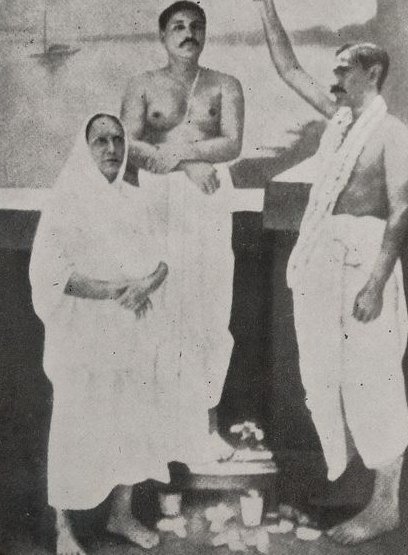
The girl in the shrine-room
She grew up in Himaitpur, on the Padma, her father’s favourite child. Every day she watched him worship the household god, an image of Krishna and Radha in brass, and she wanted the mantra so that she could worship too. Day after day she sat before the image and called to it, weeping.
One noon, as she prayed, she saw the shrine-room blaze with light. The brass image was gone from its throne, and in its place sat a living figure, tall and fair, with a long beard, smiling. She was eight.
She was married in her ninth year to Shivchandra Chakraborty, a gentle man. Soon after, she found the face again, in a picture a kinsman kept locked in a box. It was the likeness of a living master, Huzur Maharaj. His teaching was set down in Hindi; she learned the language to read it, and gave her life to him as his disciple.
In time a longing took hold of her: to become the mother of a son like her guru himself, a lover of God, a sustainer of people, a man of ideal character. She laid it at his feet. “By the will of the Supreme Father your first child will be a great soul,” he told her. “He will give you complete joy.” And when she grieved that she lived in a remote village with no fellow disciple to keep holy company with, he said: “Daughter, do not grieve. A day is coming when your house will be full of satsangis.”
A name made of a prayer
When her first-born was given his first rice, she gave him his name. Into a verse of blessing she poured what she had longed for, a son who would live for others:
Afflicted people, in distress and vain,
Necessarily bow down and
Usher their gain.
Keep doing your best to
Usurp their pain,
Look after them, till they sustain.Manomohini Devi’s verse of blessing, in Souvik Ghosh’s English acrostic · the Bengali in Brajagopal Duttaray, Sree Sree Thakur Anukulchandra, Book 1, ch. 6, p. 71
The first letters of its lines make his name: ANUKUL.
The one prize he sought
Pleasing his mother was the one intoxication of the boy’s life. He longed for her praise and her caresses; what he got instead was her discipline and her scolding, in plenty. He had one greed only: that people would praise him to his mother, and she would be happy, and call him her brave boy. He had no way at all to manage without her.
Her word was simply so. One day his foot was cut and bleeding, and the pain was unbearable. “It’s nothing,” she said. “Go on, off to school quickly.” He forgot the pain and went to school happily on the cut foot. On the day of his arithmetic examination he set out late, and she said, “Going so late, you won’t manage the exam today.” At school he read the paper and began to cry. “My mother has said I won’t be able to answer today,” he told the master. “But I see I can do all the sums. If I answer, my mother’s word will become false. What shall I do?” He knew every answer, and that day he wrote none.
From the time he was small he asked his mother and his grandmother before everything he did. Shall I get up? Shall I go? Shall I lie down? Once, when a craving for sweets would not leave him, he took money from her purse and let himself be caught; she beat him soundly, and the craving passed. In his schoolboy’s notebook there is a poem with a heading in English: “It was written when my mother chid me.” “Am I not your son, Mother?” it asks. And then, as simply as a child: “I love sweet words, Mother.”
The boat she kept afloat
For some five years her husband lay ill. Money all but stopped coming into the house, and lawsuits came instead. Manomohini kept the sinking boat afloat: the food, the treatment, the schooling, the property, the poor and the guests. When she sat frying puffed rice, he sat beside her. “Ma, don’t be afraid,” he said. “You fry lots of puffed rice and I’ll sell it — then you’ll see how much money you’ll have.”
One day noon came and went, and still there was no cooking. The children were faint with hunger, so she told them stories until they fell asleep. When they woke she had found broken rice somewhere, and she served it to them, starch and all. How sweet it tasted. Everything of his mother’s seemed sweet to him.
On a day when she had not a cowrie in hand, a villager, Haribola Bhaimali, fell weeping at her feet: unless he paid the moneylender a hundred rupees at once, his homestead was gone. She took the gold bangles from her small son’s wrists and the chain from his neck, pledged them with the village goldsmith, and paid his debt.
She had fire as well as tenderness. When two bands of fighting men with long staves fell on each other in the village and no one dared stop them, she ran there, thrust the child in her arms at a neighbour, and threw herself into the middle of the fight, commanding them in a ringing voice to stop. Some fled. Some lowered their weapons. Some fell at her feet. They left the place with their arms around one another.
She bore nine children, and five of them died young. She carried that pain in her breast, and went on with the work of her household, steadily, all her life.
Her word
As a young doctor he asked no fee. Whatever anyone gave him gladly, he took gladly, and he laid it at his mother’s feet.
When the Name awoke in him and the trances came, his mother saw him one day in that state and was so distressed that she told him, in great pain, that it must not happen again. With a great deal of struggle, he shut that state down. From then on, whenever that state began to come, he left the place and went to sit by her.
The mother of the ashram
When his father died, Thakur would not leave his mother alone with her grief for a single moment. Around her he set flowing a flood of work such as Himaitpur had never seen: a brick-field, a press, a school, a power-house, a science centre. All of it, he made sure, centred on Manomohini. The building of what would become the Vishwa Vigyan Kendra began, and she herself took charge of it. He kept himself in the background, so that people would say: it is Ma who is making all this.
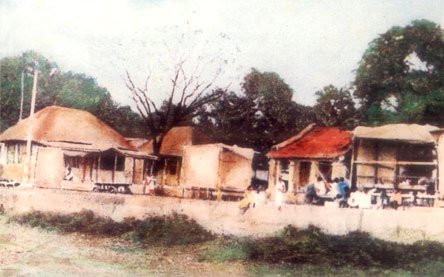
Her guru’s blessing came true. Her house filled, and thousands called her Ma. The ashram had become one family, and its mother was Manomohini. One morning word came of a bus smashed by an engine at Ishwardi in the night, on the road Brajagopal, one of the ashram’s workers, had taken. She wept aloud: “Am I to lose Brajagopal before his time…” She lay behind a closed door, weeping; Thakur sat silent by the Padma; the common kitchen stood locked, and no one ate. Late in the afternoon a telegram came: Brajagopal was safe in Calcutta. He had lost his own mother as a small child. When he heard of that day, he understood that he had another.
On Bijoya Dashami, when the images of the Goddess were given back to the river, she sat on the veranda of the house by the Padma with paddy and durva grass in her hand, to bless her children. Thakur knelt before her and laid his head at her feet. He bowed, and bowed again, gathering the dust of her feet in both hands, kissing her feet, his face wet with tears of joy. No less than half an hour went by in this way. He was nearing fifty.
Even then, if she did not sit beside him and mix his rice with her own hand, the meal gave him no pleasure, and if he lost sight of her for a moment he grew restless, like a child.
My mother is, as it were, my very life-soul. It seems to me that if my mother were not here I could not even remain in this world.
Brajagopal Duttaray, Sree Sree Thakur Anukulchandra (single-volume biography), ch. 13, part 2 · Translated by Souvik Ghosh
“You must save her”
In her last years her strong body began to give way. Once, in Calcutta, she fell critically ill. Thakur gave up food and sleep. Whoever he saw in front of him, he would clasp and weep: “My mother, it seems, will not live — you must save her, bring her back to life.” All his life the sight of excrement had filled him with disgust. Now, for many days, he cleaned his mother’s with his own hands, and felt no disgust at all.
She came through. Another time, when she went to Calcutta for tests, he wrote to the doctor in whose care she was: “I have placed the charge of tending her who is my dharma, my artha, my kama, my moksha, into your hands… I count the days and keep watching the road.”
Shelterless
Then came the illness that would not lift. He had a room made ready for her on the upper floor of the Satsang Bhavan, with everything she could need. She never moved into it. Her illness grew too heavy.
She died on a Sunday in the last month of the Bengali year, just before noon, at sixty-eight.
He struck his head with his hands and cried, “Nirashray! Nirashray!” — “Shelterless! Shelterless!” He went into her bedroom and breathed in the scent of the bed she had used. He took the pillow that had lain under her head, clasped it to his chest, and wept until his breast was wet with tears. Again and again he turned towards the cremation ground and called out: “Ma, you didn’t come! Ma, you didn’t come!”
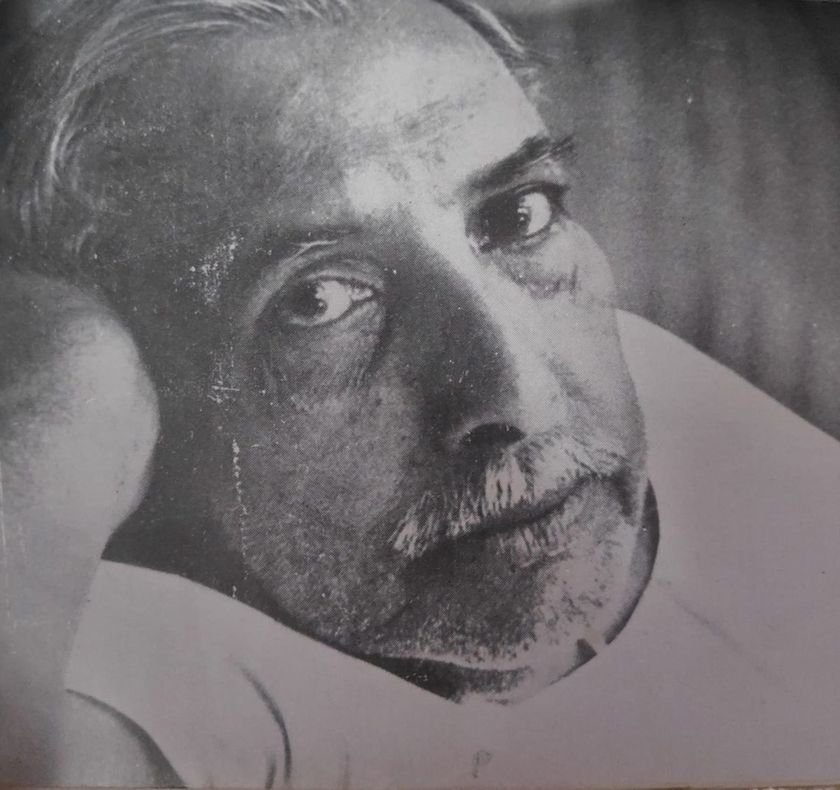
In the room she had never slept in, he had a tablet of white marble set into the wall, with his own words cut on it: “Mother! My mother! … if your heart, bound up in tenderness and compassion, should remember your Anukul as one without refuge, and seek him out — then come. Come, and stay right here.” [d]
For years, morning and evening, he had sat beside her at the ashram’s prayer, close to her lap. Now, for a long time, he did not join the prayer at all.
He who carried on his own head every day the sorrows of thousands upon thousands of people now wept, moment after moment, like a helpless child: “Ma, Ma.” And to everyone who came near him, over and over, he said the same thing:
“The one for whose sake I did everything is no longer with me today. Life and death have today become one and the same thing to me.”